
TROUBLESHOOTING PROGRESSIVE LENS PROBLEMS
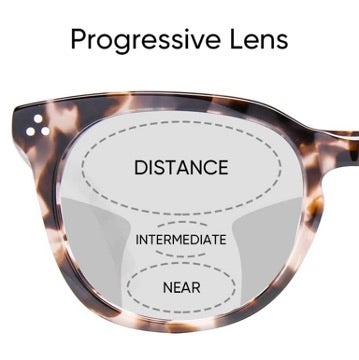
Progressive lenses are multifocal lenses that correct for nearsightedness, farsightedness and everything in between with a gradual transition between each prescription on the lens. You’ll most likely need to learn how to adjust to progressive lenses if you’re new to wearing them. Below, we have additional information and in-depth advice from our optician to help you with the adjustment period even further.
M
COMMON PROBLEMS & SOLUTIONS FOR PROGRESSIVE LENSES
30%,70%
text-medium
Blurry peripheral vision
Move your frames closer to your eyes. This might involve adjusting nose pads or pushing the frames higher up on your nose to decrease the distance between lenses and eyes. Ensure you’re moving your head and not your eyes when focusing on an object.
left
left
Eyestrain, nausea, headaches, and dizziness
Start wearing your progressive glasses in the morning, don’t switch between an older pair of glasses, check frame fit using the steps above, and ensure you’re looking through the correct portion of the lens.
left
left
Lifting your head to read
Adjust the frames to sit higher up on your nose. If your frame has nose pads, move them closer together.
left
left
Blurry vision
A new prescription might seem blurry before you get used to it, but it also might mean your pupillary distance or fitting height is off.
left
left
M
IMPORTANCE OF PUPILLARY DISTANCE (PD)
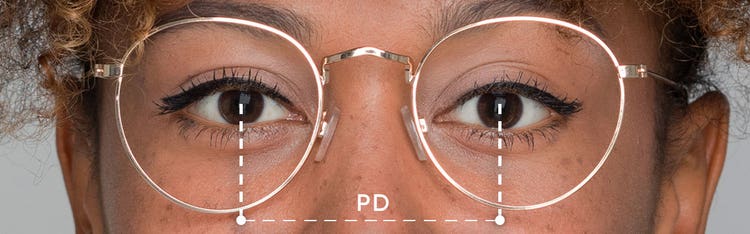
Think your progressives might be the wrong prescription? The first thing is to double check the pupillary distance (PD) on your prescription. If a PD isn’t listed, you were most likely given a standard PD when you ordered your glasses, and that can be the root cause of the issue. You can learn how to measure your pupillary distance at home or go back to your eye doctor’s office and have the optician take the measurement. This is one of the most important parts of your prescription because it determines where your pupils sit behind the lens. The lens is then cut to fit the frame so the prescription is centered on your pupils. If the PD is not exact, it can cause eye strain, dizziness, headaches, and blurred vision.
M
HOW TO CHECK YOUR PROGRESSIVE LENSES AT HOME
If you’re still experiencing progressive lens problems, try these tips from our optician to test your prescription out further. Progressive lenses often require more head movement since the sides of the lenses are blurred.
Related Articles
How to Adjust to Progressives
Adjusting to progressive lenses can take time. Our tips help make the adjustment period easier.
Adjusting to progressive lenses can take time. Our tips help make the adjustment period easier.
thin
Adjusting to Your New Progressive Prescription
10 ways to ease the transition period of a new progressive prescription.
10 ways to ease the transition period of a new progressive prescription.
thin
Frames & Lens Compatibility
The frames I love won’t work with my lens prescription—what does that mean?
The frames I love won’t work with my lens prescription—what does that mean?
XXL
Find Your Local America's Best
We look forward to serving all of your eyewear and eye care needs.
find-store