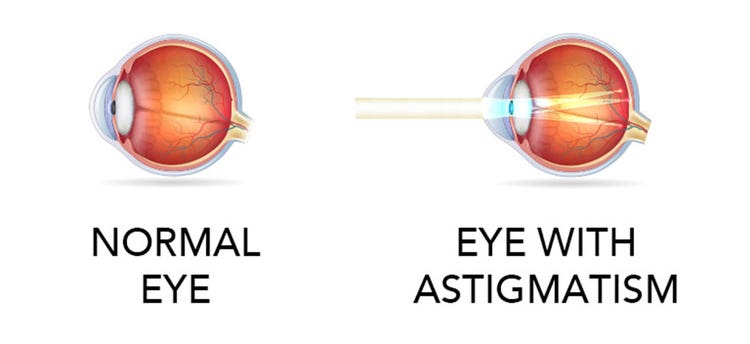
ALL ABOUT ASTIGMATISM
Astigmatism Symptoms
- Blurry and distorted vision
- Headaches
- Difficulty seeing in low light conditions
- Squinting
- Eyestrain
Astigmatism Causes
Astigmatism is hereditary and in most cases, is present at birth. Young children may not know that their vision is less than perfect until the symptoms are noticed by a parent/guardian, teacher or pediatrician. That’s why kids’ eye exams are important and getting them done at an early age is key.
WHO GETS ASTIGMATISM?
HOW TO CORRECT ASTIGMATISM
Blurriness from astigmatism can range from a small fuzz around text to high levels of distortion. Not everyone needs glasses for astigmatism since it can be so slight. However, your eyes can change and astigmatism can worsen so you still need to get regular eye exams. In severe cases, astigmatism can make simple visual tasks like watching TV or reading a text message nearly impossible. The good news is you’ll have a few options to restore your vision. You can choose between contacts or glasses for astigmatism.
Prescription glasses are the most effective option due to the ability to correct astigmatism with extreme precision. Glasses for astigmatism are typically a single-vision lens, but bifocals may be recommended for those over 40. Astigmatism contact lenses—or toric contacts—have become much more accurate and are preferred over hard contacts. In some cases, eye surgery may be recommended. A comprehensive eye exam will quickly determine if you have astigmatism, and if so, the best corrective method to accommodate your lifestyle.
Maintaining good eye health goes far beyond making sure our vision isn't blurry. Eye doctors conduct a wide variety of tests to examine and assess the quality and health of your vision.
Learn about the common eye disorders and diseases such as astigmatism, hyperopia, myopia, and more.