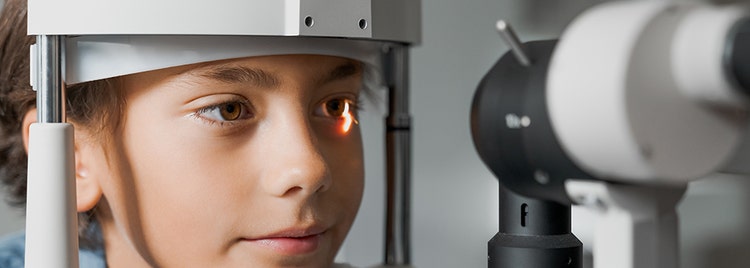
KIDS' VISION: IMPORTANCE OF EARLY EYE EXAMS
Vision is learned. Just like how a child’s brain learns to use legs to walk and mouths to talk, it learns to use eyes to see. Undiagnosed and untreated vision problems can lead to a brain’s accommodation of that problem. Early detection and treatment are essential to correcting vision problems so your child can learn to see.
M
CHILD'S FIRST EYE EXAM
The American Optometric Association (AOA) recommends that you take your baby to an optometrist for a thorough eye examination at 6 months of age, even if there are no apparent problems. Most children don’t know how they are supposed to see and a slight blur may go undetected by teachers and pediatricians for many years.
48%,48%
text-dark
First Exam Test :
- Excessive amount of nearsightedness
- Excessive amount of farsightedness
- Excessive amount of astigmatism
- Eye movement
- Any other eye health problems
Tips For A Positive Experience :
- Make an appointment early in the day—allow a minimum of 1 hour
- Talk about the exam in advance and encourage questions.
- Explain the steps in easily understandable terms; the eye chart can be compared to puzzles and any instruments to tiny flashlights
left
left
text-dark
M
WHAT'S NEXT?
If no problems were detected at the first exam, the next comprehensive eye exam should happen around age 3 to make sure vision is developing properly and there is no evidence of eye disease.
Unless your eye doctor advises otherwise, your child's next eye exam should take place as they’re starting kindergarten. This will enable your eye doctor to compare the results of the two tests to determine how well your child’s vision is developing.
M
VISION SCREENING ≠ VISION EXAM
It is important to know that vision screenings are not the same as vision exams. A vision screening is usually done by a pediatrician or school nurse and only assesses one or two areas of vision. It can be the first indicator of whether or not further evaluation is necessary, but it cannot diagnose eye problems or determine vision development.
M
HOW OFTEN TO GET AN EXAM
Vision can frequently change during the school years so getting an eye exam annually is recommended. Unfortunately, parents and educators often incorrectly assume that if a child passes a school screening, that there is no vision problem. In reality, vision screenings will miss up to 60% of school-aged children with vision problems. Eye focusing, eye tracking and eye coordination are all issues that a child with 20/20 vision can have.
M
SIGNS OF VISION PROBLEMS
text-dark
Ages 2-5 :
- Sitting close to the TV
- Holding a book too close
- Squinting
- Frequent eye rubbing
- Sensitivity to light
- Difficulty with eye-hand-body coordination
Ages 6-18 :
- Discomfort and fatigue
- Frequent eye rubbing or blinking
- Short attention span
- Frequent headaches
- Holding reading materials too close
- Seeing double
left
left
text-dark
M
XXL
Related Articles
Buying Right Glasses for Kids
Shopping for kids’ glasses involves more than simply choosing a color. Check out a few important details you should keep in mind.
Shopping for kids’ glasses involves more than simply choosing a color. Check out a few important details you should keep in mind.
thin
How to Help Kids Adjust to New Glasses
If you've just ordered new glasses for your child, they might need some time to get used to them. Learn about the common symptoms and solutions for kids adjusting to new glasses.
If you've just ordered new glasses for your child, they might need some time to get used to them. Learn about the common symptoms and solutions for kids adjusting to new glasses.
thin
Signs Your Teenager Needs an Eye Exam
Learn six signs that your teen needs a new eye exam.
Learn six signs that your teen needs a new eye exam.
XXL
Find Your Local America's Best
We look forward to serving all of your eyewear and eye care needs.
find-store